
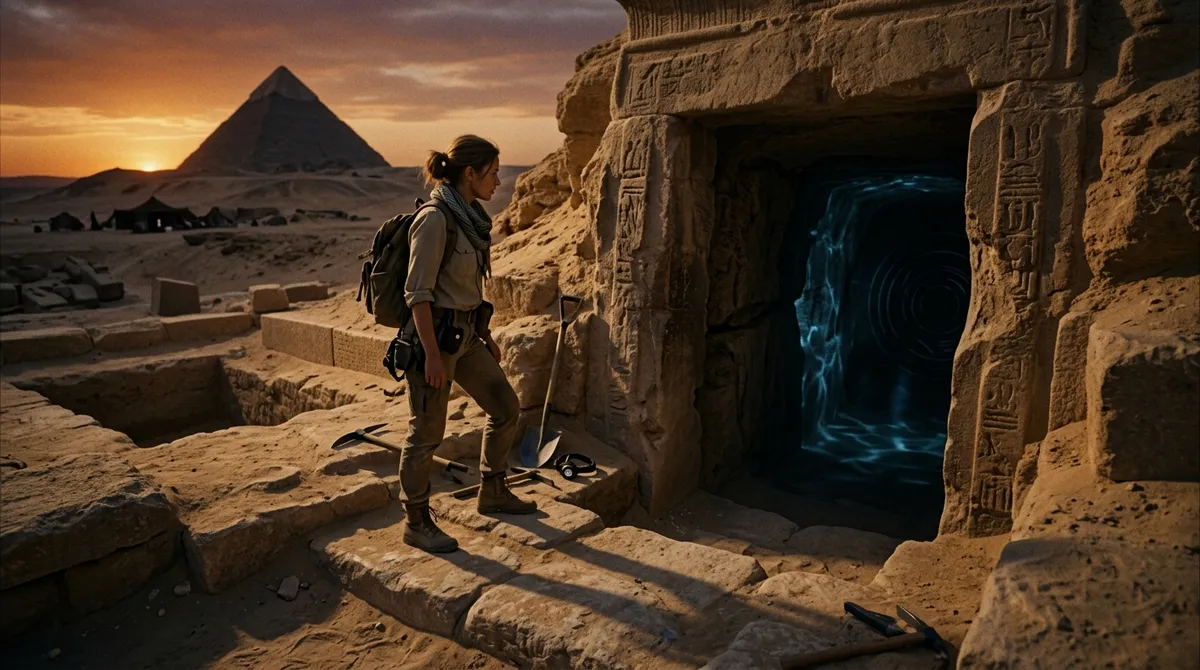
The Lost Labyrinth of Hawara is an enigma that has intrigued historians and archaeologists alike. Described by the Greek historian Herodotus in 450 BC, this labyrinth was said to be so grand that it dwarfed even the mighty pyramids of Egypt. For millennia, the labyrinth remained a mere legend, hidden beneath the sands of the Egyptian desert.
In 2008, a groundbreaking discovery was made when scientists using ground-penetrating radar uncovered a massive structure buried 40 feet underground. Measuring the size of ten football fields, this find reignited interest in the labyrinth's history and potential links to the lost civilization of Atlantis.
A Discovery Shrouded in Mystery
Despite this significant find, the Egyptian government quickly halted all further research, leaving many questions unanswered. Satellite imagery suggested that the labyrinth contained four underground levels and a mysterious 130-foot metallic object at its core.
Theories and Ancient Narratives
Ancient Egyptian priests once told Herodotus that the deepest chambers of the labyrinth held the burial vaults of the kings who predated the pharaohs. If true, this implies that Egyptian civilization may have inherited knowledge from a much older society, possibly linking back to the legendary Atlantis.
Ongoing Speculation and Research Challenges
Those who have attempted to investigate further, like the researcher who published his findings, have faced significant pushback, including being blacklisted. As the debate continues, the Lost Labyrinth of Hawara remains a tantalizing mystery, offering both historical and cultural insights into ancient Egypt and its potential connections to other legendary civilizations.
Despite the obstacles, the search for answers persists, driven by the hope of uncovering truths about the origins of one of the world's oldest civilizations.